
ABOUT US
Who we are?
We accelerate Customer’s Business Transformation Journey through our competencen 3iconsultancy Consulting, Integration and Security, delivering Next-Gen Digital Infrastructure Technologies, Solutions and Services
What we do?
We collaborate with trusted IT partners to deliver outstanding results through our portfolio services. We help you transform your business to enhance your Revenue, Profitability, Business Outcomes and Customer Experience

Our Services
IT INFRASTRUCTURE
Hardware
Software
Networking
IT Infrastructure Management

CYBER SECURITY
- Governance, Risk and Compliance
- Security Operations and Automation
- Managed Security Services
- Cloud Security Practice
- Data Security Practice
- Network Security Practice
- End Point Security Practice
- Professional Services

CLOUD
Cloud Management
IT MANAGED SERVICES
Managed Service Provider
Managed IT Services
IT INFRASTRUCTURE
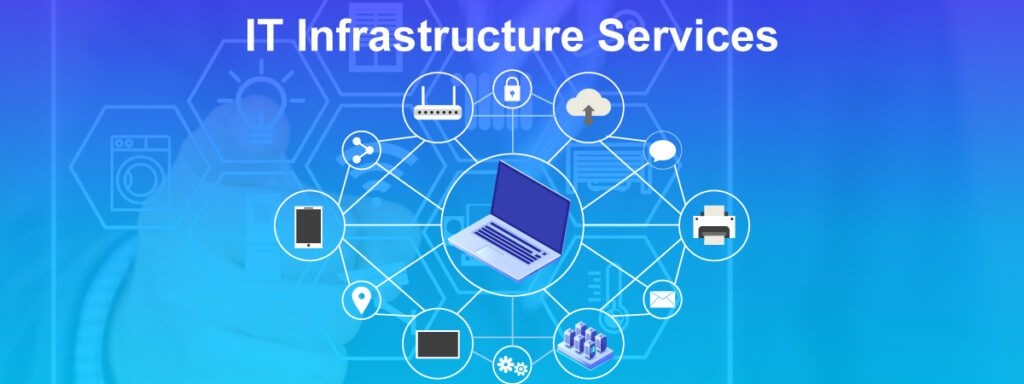
Information technology (IT) infrastructure are the components required to operate and manage enterprise IT environments. IT infrastructure
can be deployed within a cloud computing system, or within an organization’s own facilities.
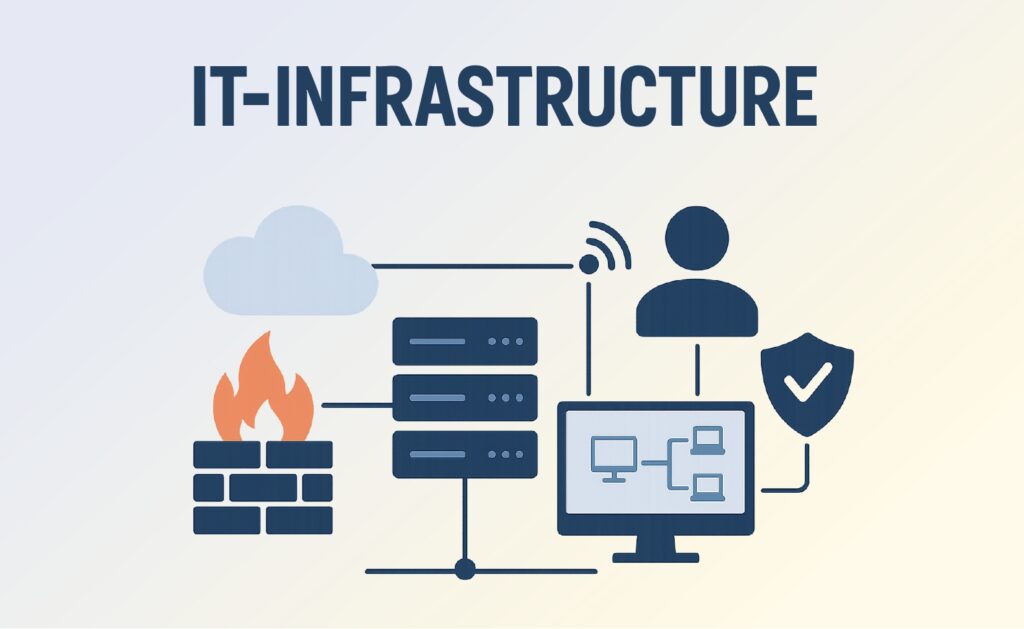
These components include hardware, software, networking components, an operating system (OS), and data storage, all of which are used to
deliver IT services and solutions. IT infrastructure products are available as downloadable software applications that run on top of existing IT
resources—like software-defined storage—or as online solutions offered by service providers—like Infrastructure-as-a-Service (IaaS).
What are the components of IT infrastructure?
Hardware
Hardware includes servers, datacentres, personal computers, routers, switches, and other equipment.
Software
Software refers to the applications used by the business, such as web servers, content management systems, and the OS—like Windows,
Linux®. The OS is responsible for managing system resources and hardware and makes the connections between all your software and the
physical resources that do the work.
Networking
Interconnected network components enable network operations, management, and communication between internal and external systems.
The network consists of internet connectivity, network enablement, firewalls, and security, as well as hardware like routers, switches, and
cables.
Types of IT infrastructure
Traditional infrastructure
With a traditional infrastructure, the components—like datacentres, data storage, and other equipment—are all managed and
owned by the business within their own facilities. Traditional infrastructure is often thought of as expensive to run and
requires large amounts of hardware, like servers, as well as power and physical space.
Cloud infrastructure
Cloud infrastructure describes the components and resources needed for cloud computing. You can create a private cloud by
building it yourself using resources dedicated solely to you. Or you can use a public cloud by renting cloud infrastructure from
a cloud provider like Alibaba, Amazon, Google, IBM, or Microsoft. And by incorporating some degree of workload portability,
orchestration, and management across multiple clouds you can create a hybrid cloud.
Hyperconverged infrastructure
Hyperconverged infrastructure allows you to manage your computer, network, and data storage resources from a single
interface. With software-defined computer and data storage bundled together, you can support more modern workloads with
scalable architectures on industry-standard hardware.
IT INFRASTRUCTURE
IT infrastructure management
IT infrastructure management is the coordination of IT resources, systems, platforms, people, and environments. Here are some of the most common technology
infrastructure management types:
OS management: Oversees environments running the same OS by providing content, patch, provisioning, and subscription management.
Cloud management: Gives cloud admins control over everything running in a cloud—end users, data, applications, and services—by managing resource
deployments, use, integration, and disaster recovery.
Virtualization management: Interfaces with virtual environments and the underlying physical hardware to simplify resource administration, enhance data analyses,
and streamline operations.
IT operations management: Also known as business process management, this is the practice of modeling, analyzing, and optimizing business processes that are
often repeated, ongoing, or predictable.
IT automation: Creates repeatable instructions and processes to replace or reduce human interaction with IT systems. Also known as infrastructure automation.
Container orchestration: Automates the deployment, management, scaling, and networking of containers.
Configuration management: Maintains computer systems, servers, and software in a desired, consistent state.
API management: Distributes, controls, and analyzes the application programming interfaces (APIs) that connect apps and data across enterprises and clouds.
Risk management: Identifies and assesses risks and creates plans to minimize or control those risks and their potential impacts.
Data management: Gathers, stores, and uses data, allowing organizations to know what data they have, where it is located, who owns it, who can see it, and how
it is accessed.
CLOUD
What is cloud management?
Overview
Cloud management is how administrators control—and orchestrate—all the products and services that operate in a cloud: the users and
access control, data, applications, and services. It’s about giving admins the ability to access the resources they need, automate those
processes that they want to, and make adjustments as needed, while also monitoring usage and cost. It’s also how admins maintain flexibility and scalablity, while being able to adapt quickly when things change.
Cloud mangement tools help admins oversee all types of cloud (public cloud, private cloud, hybrid and multicloud) and cloud activities, from
resource deployment and use tracking to data integration, Kubernetes, and disaster recovery. They provide administrative control over the
infrastructure, platforms, applications, cloud provider and cloud service provider resources, and data that—together—create a cloud.
How does cloud management work?
Cloud management software is typically deployed into existing cloud environments as a virtual machine (VM) that contains a database and a server. The server communicates with application programming interfaces (APIs) to connect the database and virtual, cloud, or containerbased resources holding up—and interacting within—the cloud. The database collects information on how the virtual or cloud infrastructure is performing and sends analyses to a web interface where cloud admins can visualize and analyze cloud performance. Admins can also relay commands back to the cloud, which are carried out by the virtual server.
All that interconnectivity relies on perhaps the most overlooked technology of all: the operating system (OS). The operating system not only
commands all the different technologies that make up clouds, but it also deploys your cloud management tools. That operating system needs to work with whatever cloud you use—no matter how unique it is—which is why many cloud-based operating systems are open source, like
Linux®.
Cloud management is not cloud computing
Clouds provide the rules and cloud management carries them out. Clouds are pools of virtual resources, storage, applications, and services
that are managed by software so the resources can be accessed on demand. Cloud management is a combination of software, automation,
policies, governance, and people that determine how those cloud computing services are made available.
What a cloud management platform should do
Integrate with existing IT
A cloud management platform (CMP) must be customized to your needs: it must meet the requirements of the operating system, apps,
provisioning, cloud security, storage frameworks, standard operating environments (SOEs), and whatever else is running in the cloud. They
should also be flexible and able to adapt to change quickly.
Automate manual tasks
Automation removes manual human interaction from as many everyday tasks and workflows as possible, which has the dual advantage of
increasing efficiency and decreasing errors. Automation lifts a huge burden for cloud computing and is vital to any cloud management
platform.
Visualize costs
It’s easy to use cloud services, so it’s very easy to use more than you can afford. A cloud management platform should provide accurate cost management, forecasting, and reporting.
Be accessible through the internet
Like the resources, data, and processing power of your cloud, your cloud management tools should be accessible by the admin regardless of where he or she—or the infrastructure—is.
Support hybrid cloud and multicloud environments
By necessity, an enterprise’s future is filled with all types of clouds: private, public, and hybrid. Every cloud management platform should be
able to support all types of cloud smoothly and securely across multiple environments.
Manage everything
This may seem like a given, but self-service capabilities are vital to any cloud management platform in order to stay flexible and adaptable in the face of frequent changes and updates. It should maintain control over everything, while policies guide user access to resources,
configurations, and capacity. Orchestration of the entire infrastructure—on-premises—virtual, data centers, etc.—throughout the lifecycle is
essential.
IT MANAGED SERVICE

What are managed IT services?
Managed IT services are tasks handled by a third party, frequently in the context of business information technology services.
The managed services model is a way to offload general tasks to an expert in order to reduce costs, improve service quality, or
free internal teams to do work that’s specific to their business. A company that provides these service offerings is called a
managed service provider (MSP).
What is a managed service provider (MSP)?
The third party that delivers services is called a managed service provider. A managed IT service provider is most often an IT service provider that manages and assumes responsibility for providing a defined set of business technology services to its clients, either proactively or as the MSP (not the client) determines that services are needed. The managed service provider is responsible for the functionality of the service or equipment, managed under a service level agreement (SLA). The SLA will contain provisions for typical downtime, disaster recovery, technical support, and help desk operations. The customer receiving the service often pays a monthly subscription fee. Organizations outsource the responsibility for maintaining—and anticipating the IT needs for—a range of processes and functions in order to improve operations, cut expenses, and streamline IT management.
What are the benefits of using managed IT services?
Managed IT services are beneficial for both large organizations and small businesses; new companies and established ones.
Some of the benefits of using managed services include:
Filling the skills gap. Managed services can be good for teams that don’t have the time, skills, or experience internally to manage certain business functions on their own, or choose to focus their efforts on other initiatives. Relying on an expert to provide a service allows your teams to focus on innovation without getting bogged down in routine tasks. Cost savings. Many managed services are tied to variable cloud expenses. These services can save you money on staff and training. Pricing for other managed services is usually included in a fixed monthly charge. Engaging a managed service company instead of building in-house IT operations can be cheaper and the costs can be more predictable, which is helpful for budgeting. Reliability. You can worry less about outages because the managed service provider is responsible for keeping the service available at all times. Services and IT support are provided under an SLA, so it is clear what to expect and when to expect it. An in-house IT team is often juggling multiple responsibilities but an MSP can focus on perfecting delivery of their specific service. This means focusing on the health and security of the service, applying patches and upgrades as needed.
What kinds of managed IT services are available?
Managed IT services can range from general to specific, depending on your needs. Common services can include the monitoring and maintenance of equipment, IT systems management, remote monitoring and management of servers, network monitoring, and other support services.
The traditional approach to managed services is a break/fix model which monitors systems until there is a problem to remediate. Many modern managed service providers take a more proactive approach to maintenance and management, which can include patch management and predictive maintenance.
Cloud-based managed services can range from specific applications delivered “as a service” (Software as a Service, or SaaS) to platforms and infrastructure as a
service (IaaS and PaaS). These services can help businesses scale rapidly to meet increasing demand without the associated datacenter and IT infrastructure costs.
Cloud-based services can also provide greater access to data, analytics, and storage.
Other companies provide managed security services for both traditional bare metal infrastructure and cloud services. Having reliable and trusted security experts
is especially important to companies with hybrid cloud infrastructure.
What’s the difference between managed IT services and cloud services?
The phrase “managed IT services” sometimes appears alongside other terms like “cloud services,” but what’s the difference?
Cloud services are software offerings managed by vendors and delivered to customers on demand. Cloud services generally include vendor management of
application, data, and platform services, but usually don’t include management of the customer workload itself, whereas managed IT service providers typically
provide the cloud platform on which their service is delivered as part of their service.
CYBER SECURITY
Governance, Risk and Compliance
Integrated Risk Management
DLP is a security strategy that prevents your business users from sending sensitive information
Cloud Security Posture Management (CSPM)
Data discovery and classification provides the basic capabilities for discovering, classifying, labeling
Identity Governance & Administration (IGA)
This service helps block phishing emails and malware threats before they
Measure And Mitigate Your Cyber Risk Posture
Optimize your security
posture by drastically
reducing the time spend on
executing
Risk-Based Vulnerability Management
Deliver a seamless
experience for every user,
asset, and data interaction,
and provides
Cyber Security Posture Improvement
Deliver a seamless
experience for every user,
asset, and data interaction,
and provides
CYBER SECURITY
Security Operations and Automation
SOC / SIEM
Security Operations Center/ Security
Information and Event Management
helps in continuous monitoring of an
organization’s security posture is
critical to empower organizations with
rapid incident response, threat
detection and remediation
Log Management & Analysis
Log management and analysis
services for large volumes of
organizational data. This includes
security event aggregation and
correlation for actionable insights to
improve security.
CYBER SECURITY
Managed Security Services
Device Monitoring & Management
Helps to decrypt traffic and
only re-encrypts the original
decrypted data sent to the
devices.
Log Management & Analysis
Simplify how you manage
remote access for
employees and third parties
and devices
Managed Detection & Response
Detect and block
unauthorized attempts to
access the network and
prevent sharing data
Cyber Security Management Outsourcing
Establish a protective layer
of content filtering devices
(CFD) between your internal
private network and threats.
Governance Services
Apply DDoS mitigation
policies, and risk controls to
your network traffic and block
cyberattacks instantly.
CYBER SECURITY
Cloud Security Practice
Next-Generation Firewall (NGFW)
An intrusion prevention
system, high application
awareness, and intelligence
feeds that identifies latest
threats.
Cloud Security Compliance Management
Ensures your business is
compliant with regulatory
requirements and internal
policies
Web Application Firewall (WAF)
Protect your network against
vulnerabilities by filtering out
malicious traffic
Web Application Firewall (WAF)
Protect your network against
vulnerabilities by filtering out
malicious traffic
Cloud Access Security Broker (CASB)
Serving as a policy
enforcement centerapplying
to business utilization in the
cloud
Server Security
Protect the valuable data
and assets stored on your
servers, as well as the
server’s resources
CYBER SECURITY
Data Security Practice
Data Loss Prevention (DLP) & Encryption
DLP is a security strategy that
prevents your business users
from sending sensitive data
outside the network.
Data Discovery & Classification
An Engine that scans your
database and identifies
columns that contain
potentially sensitive data
Application Security & Mobile App Security RASP
Our threat analytics provides
snapshots of all hacking
attempts on mobile apps and
app security
Email & Web Isolation
Blocks phishing emails &
malware threats, and prevents
users from uploading
confidential files
CYBER SECURITY
Network Security Practice
SSL Visibility & Decryption
Helps to decrypt traffic and
only re-encrypts the original
decrypted data sent to the
devices
Network Access Control & Behaviour
simplify how you manage
remote access for employees
and third parties and devices
Analysis Detection
Detect and block
unauthorized attempts to
access the network and
prevent sharing data
Network Device & Security Management
Establish a protective layer of
content filtering devices
(CFD) between your internal
private network and threats
Anti-APT & Anti-DDoS Deception
Apply DDoS mitigation
policies, and risk controls to
your network traffic and block
cyberattacks instantly
Log Management SIEM
Conduct highly accurate
forensic data analysis into
network events, and flag
potential threats before
attacks occur
CYBER SECURITY
Endpoint Security Practice
NGAV & EDR Encryption
Give your IT Ops team the
power of automation, and
ensure compliance of all your
endpoints wherever they are
User & Entity Behavior Analytics (UEBA)
Deploy the latest user
behavior analytics tools to
detect potential threats to your
infrastructure.
IoT & Server Security MDM & MTP
Enables you to improve
visibility of your network, and
help you respond quickly and
effectively
Asset, Patch & Vulnerability Management
Optimize your security
posture by drastically
reducing the time spend on
executing, managing, and
prioritizing
PROFESSIONAL SERVICES
Solution Design
We undertake custom
solution design based on
requirements gathered,
assessment of the
environment and delivery of
Proof of Value.
Architecture Definition
We clearly define
architecture for the solution
and develop integration
strategies with best practices
for deployment
Implementation Services
We deliver solution
implementation as well as
operationalization and
platform stabilization.
3iConsultancy - Accelerating Your Business Transformation
Who We Are
At 3iConsultancy, we are dedicated to accelerating our customers’ business transformation journeys. With expertise in Consulting, Integration, and Security, we deliver next-generation digital infrastructure technologies, solutions, and services that enable organizations to thrive in a rapidly evolving digital landscape.
Our Vision and Mission
Vision
To be a global leader in digital transformation, empowering businesses with innovative technologies and expert consulting services.
Mission
Our mission is to enable businesses to achieve enhanced revenue, profitability, business outcomes, and customer experiences by leveraging the power of digital solutions.
What We Do
At 3iConsultancy, we collaborate with trusted IT partners to deliver exceptional results. Our comprehensive portfolio of services is designed to:
- Transform your business operations for maximum efficiency.
- Enhance customer experiences through advanced digital solutions.
- Drive revenue growth and improve profitability.
- Implement robust security and integration strategies.
Our Key Services
1. Consulting Services
Our consulting team works closely with your organization to analyze current processes, identify gaps, and design effective strategies for digital transformation.
2. Integration Services
We integrate advanced digital infrastructure technologies to streamline operations, ensuring seamless connectivity between systems and platforms.
3. Security Solutions
Protecting your digital assets is our priority. We offer comprehensive security solutions that safeguard your data and maintain business continuity.
4. Next-Gen Digital Infrastructure
We provide state-of-the-art infrastructure solutions, enabling businesses to scale efficiently and adopt new technologies with ease.
Why Choose 3iConsultancy?
Choosing 3iConsultancy means partnering with a trusted advisor in digital transformation. Our advantages include:
- Proven expertise in consulting, integration, and security.
- Strong collaboration with top IT partners.
- Customized solutions tailored to your business goals.
- Focus on measurable outcomes, including revenue growth and customer satisfaction.
Industries We Serve
Our solutions are versatile and cater to multiple industries, including:
- Healthcare
- Finance & Banking
- Retail & E-commerce
- Manufacturing & Logistics
- Education & E-Learning
Our Approach to Business Transformation
We follow a structured approach to ensure successful digital transformation:
1. Assessment & Strategy
Analyze current business processes and define a digital transformation roadmap.
2. Implementation & Integration
Deploy solutions and integrate them with existing systems to optimize performance.
3. Monitoring & Optimization
Continuous monitoring and refinement of strategies to ensure sustainable growth.
FAQs About 3iConsultancy
1. What services does 3iConsultancy provide?
We provide consulting, integration, security solutions, and next-gen digital infrastructure services tailored to your business needs.
2. How does 3iConsultancy help improve business outcomes?
By leveraging advanced digital solutions, we optimize operations, enhance customer experience, and drive revenue growth.
3. Which industries can benefit from 3iConsultancy services?
We serve healthcare, finance, retail, manufacturing, education, and more.
4. Why should I choose 3iConsultancy over other IT consulting firms?
We combine proven expertise, trusted partnerships, and customized solutions to deliver measurable business outcomes.
5. Can 3iConsultancy assist in implementing cybersecurity measures?
Yes, we provide comprehensive security solutions to protect your digital assets and ensure business continuity.
Conclusion
3iConsultancy is your partner in driving business transformation through consulting, integration, and security. By leveraging next-gen digital infrastructure technologies, we empower businesses to achieve enhanced revenue, profitability, and customer satisfaction. Partner with 3iConsultancy to unlock the full potential of your business in the digital era.

Easy to Learn
Simple, user-friendly platform for seamless learning

Flexible Scheduling
Learn on your time with flexible sessions.

Best Pricing
Top experts dedicated to helping you succeed.
About US
Who we are?
We accelerate Customer’s Business Transformation Journey through our competence in Consulting, Integration and Security, delivering Next-Gen Digital Infrastructure Technologies, Solutions and Services
What we do?
We collaborate with trusted IT partners to deliver outstanding results through our portfolio services. We help you transform your business to enhance your Revenue, Profitability, Business Outcomes and Customer Experience.
Contact Us
Hyderabad
Flat No.301, Block-A, Vijaya Durga Estates, Nizampet Road, Hyderabad, India-500090
Bangalore
Flat No.301, 3rd Floor, Plot No.120, Sai Kiran Apartment, Vasantha Vallabha Nagar, Bangalore, India-560062
Email: : info@3iconsultancy.in
Website: 3iconsultancy.com